NeSy2026
Paper →Ph.D. Candidate · Aerospace Autonomy & AI
Iman Sharifi
I build safe, interpretable, and verifiable AI for autonomous flight — from multi-agent reinforcement learning to neuro-symbolic reasoning and large language models.
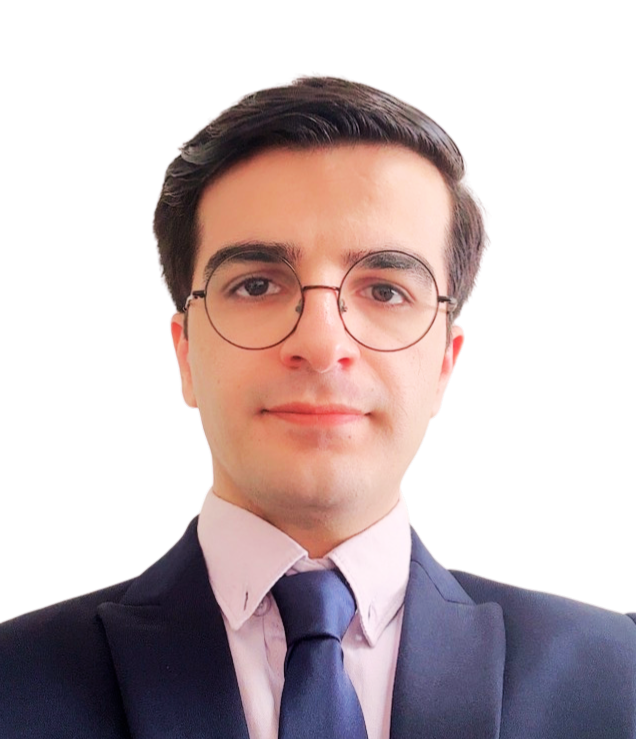
LocationStanford, CA FocusMulti-Agent RL · Neuro-Symbolic AI · LLMs Status● Seeking 2026–27 research internships
About
ProfileI am a Ph.D. Candidate in Mechanical and Aerospace Engineering at George Washington University, Washington DC, USA, where my research lies at the intersection of control, optimization, and decision-making. In particular, I work on multi-agent reinforcement learning, neuro-symbolic artificial intelligence, and large language models (LLMs). I am broadly interested in developing interpretable and verifiable AI systems for safety-critical applications such as unmanned aerial systems (UAS) traffic management (UTM), advanced air mobility (AAM), and autonomous driving. My current Ph.D. program is funded by the National Aeronautics and Space Administration (NASA) University Leadership Initiative (ULI).
Currently, I am a visiting student researcher in the Stanford Intelligent Systems Laboratory (SISL) at Stanford University, Department of Aeronautics and Astronautics, where I conduct research on safeguarding LLMs/VLMs using retrieval-augmented generation (RAG) in aviation applications. I have also conducted research as a visiting student researcher at the Connected and Automated Vehicles Lab (CAV-Lab), University of Surrey, focusing on symbolic imitation learning and safe decision-making for autonomous vehicles using neuro-symbolic reinforcement learning in 2023.
To date, my work has been published in venues such as IEEE ITSC, CVPR Workshops, IJCAI, Smart Agricultural Technology, Transportation Research Record (TRR), Applied Sciences, and the AIAA SciTech Forum.
News
Recent activity2026 · 06
Our paper ANDRE: An Attention-based Neuro-symbolic Differentiable Rule Extractor was accepted at NeSy 2026 (Int’l Conference on Neurosymbolic Learning and Reasoning).
2026 · 06
Joined the Stanford Intelligent Systems Laboratory (SISL), Dept. of Aeronautics & Astronautics, as a visiting researcher.
2026 · 06
Presented our poster at CVPR 2026 in Denver, Colorado.
2026 · 04
Paper accepted at IEEE ITSC 2026, Naples — Separation Assurance between Heterogeneous Fleets of sUAS via Multi-Agent Reinforcement Learning.
2026 · 04
Defended my Doctoral Qualifying Exam (DQE) — now a Ph.D. Candidate at George Washington University.
2026 · 03
Paper accepted at CVPR Workshops 2026 — Fine-Tuning Large Language Models for Cooperative Tactical Deconfliction of sUAS.
2025 · 10
Published Agricultural Spraying Drones: A Comprehensive Review in Smart Agricultural Technology.
2025 · 09
Two papers accepted at AIAA SciTech Forum 2026 on UTM and AAM cybersecurity.
2025 · 08
Published Integrating Neurosymbolic AI in Advanced Air Mobility: A Comprehensive Survey at IJCAI 2025.
Research Interests
Control · Optimization · Decision-making- Safe & Interpretable Reinforcement Learning
- Neuro-Symbolic Reasoning & Differentiable Logic
- Multi-Agent Systems & Airspace Management
- Autonomous Vehicles & Advanced Air Mobility
- Generative AI for Control & Decision-Making
Affiliations & Sponsorship
Let’s collaborate
I'm always glad to discuss research in reinforcement learning, neuro-symbolic AI, and large language models — and I'm actively seeking 2026–2027 research internships in academia, research labs, or industry.